Dress, Dreams & Desire: Fashion and Psychoanalysis at The Museum at FIT
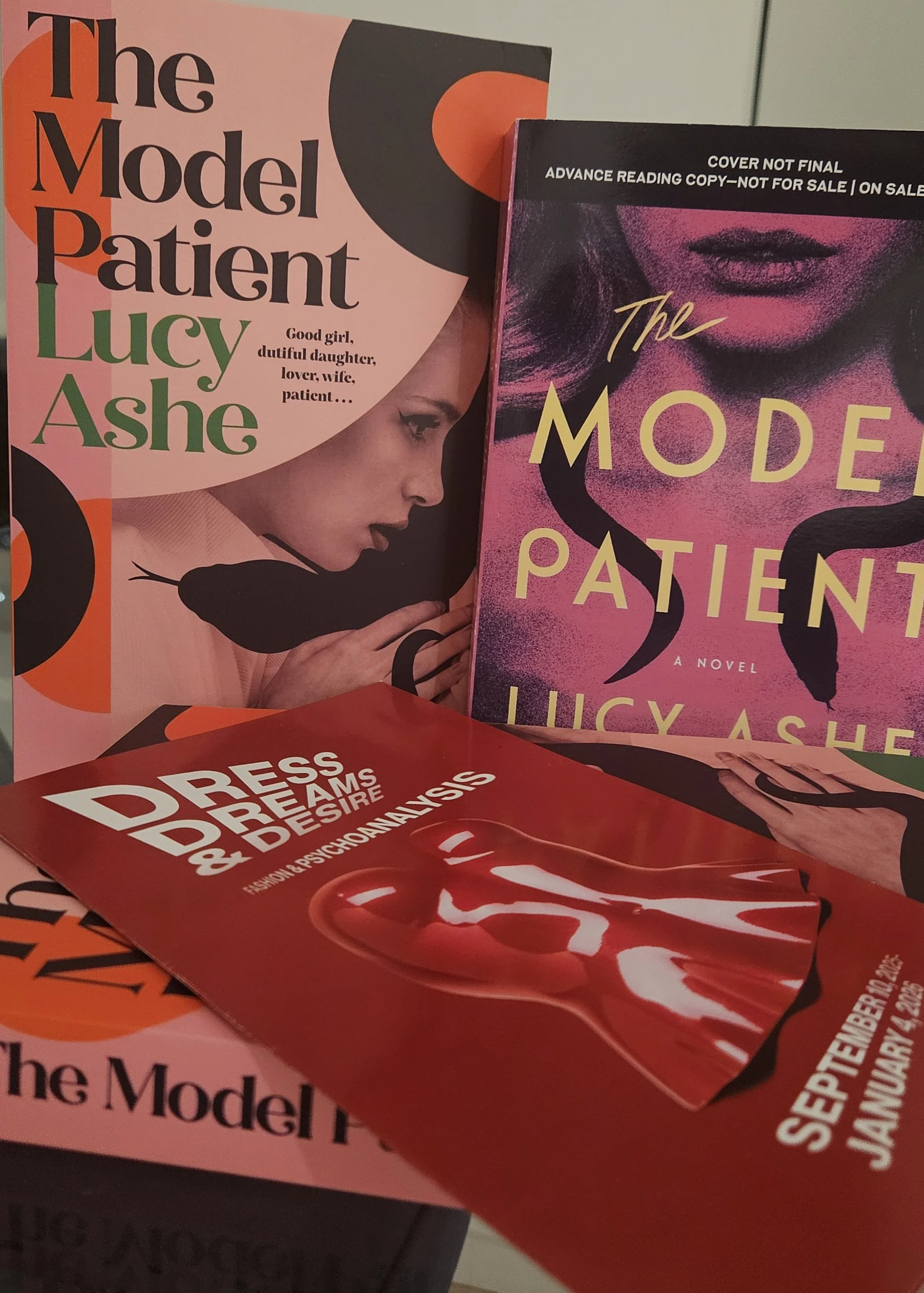
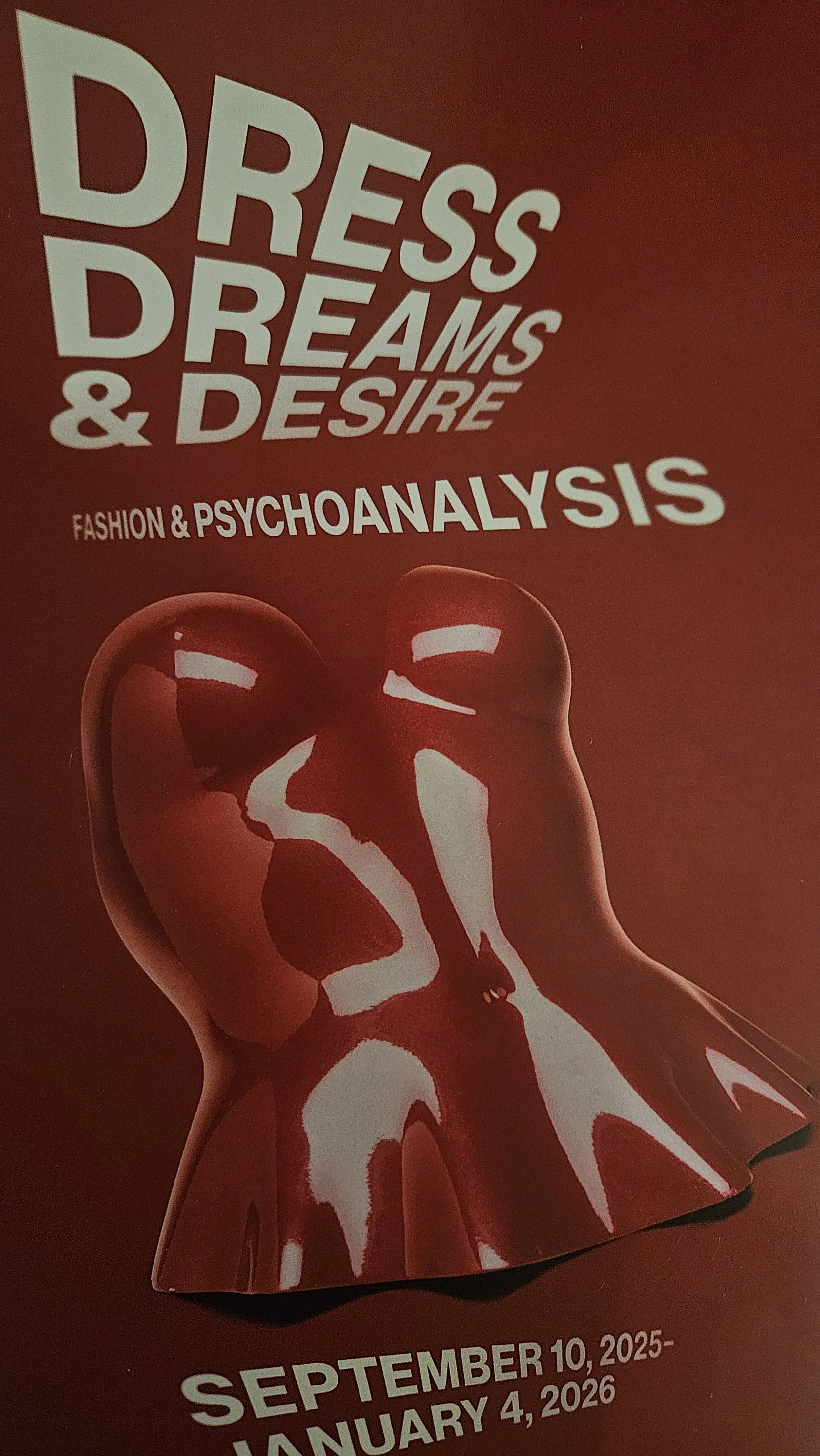
In writing my upcoming novel, THE MODEL PATIENT, I spent many months researching two significant themes for the book: psychoanalysis and 1960s fashion. And so when I saw that there was an exhibition on fashion and psychoanalysis at The Museum at FIT from September to January this year, I decided this would be my first museum visit since giving birth to my baby girl in August.
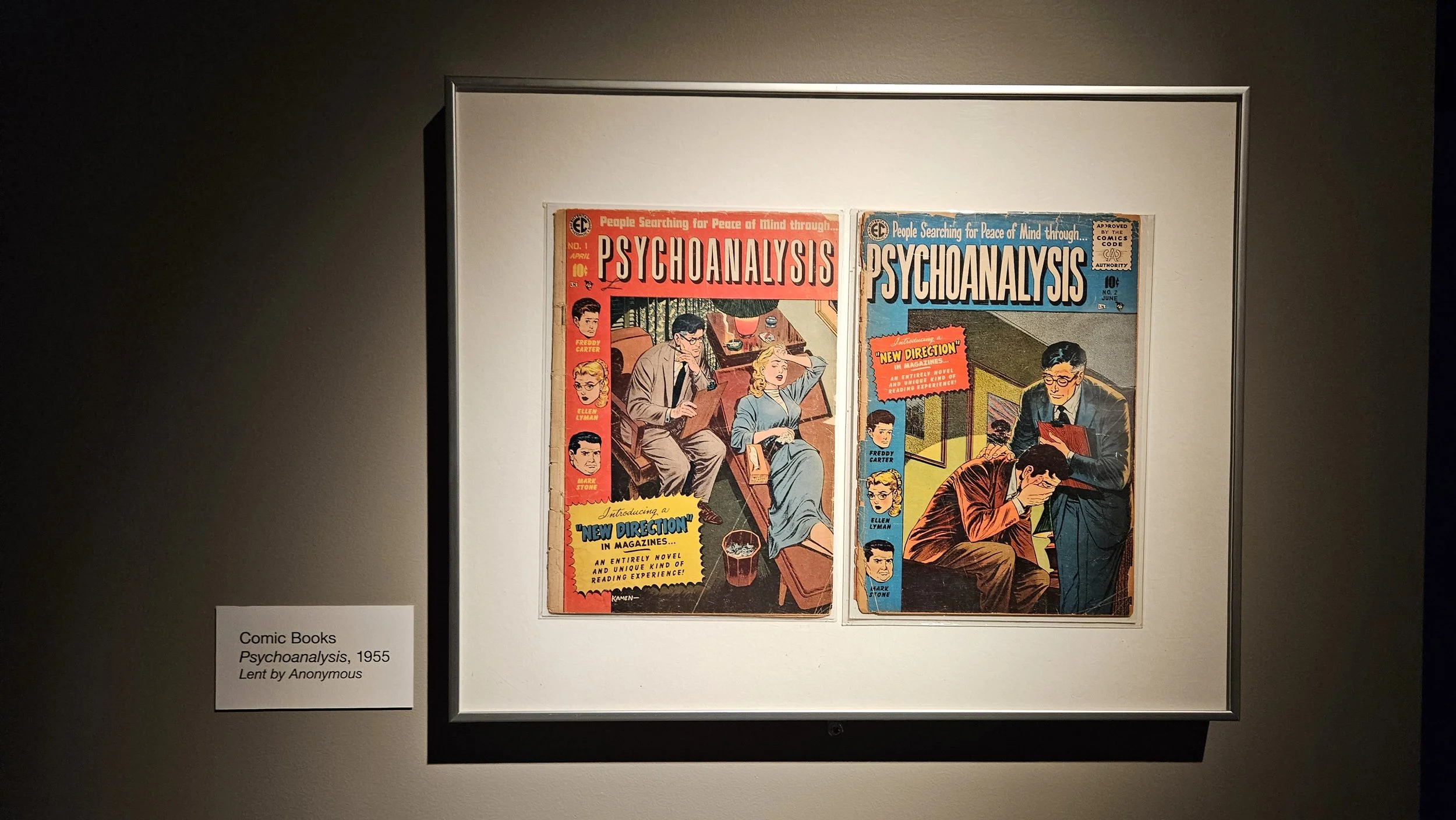
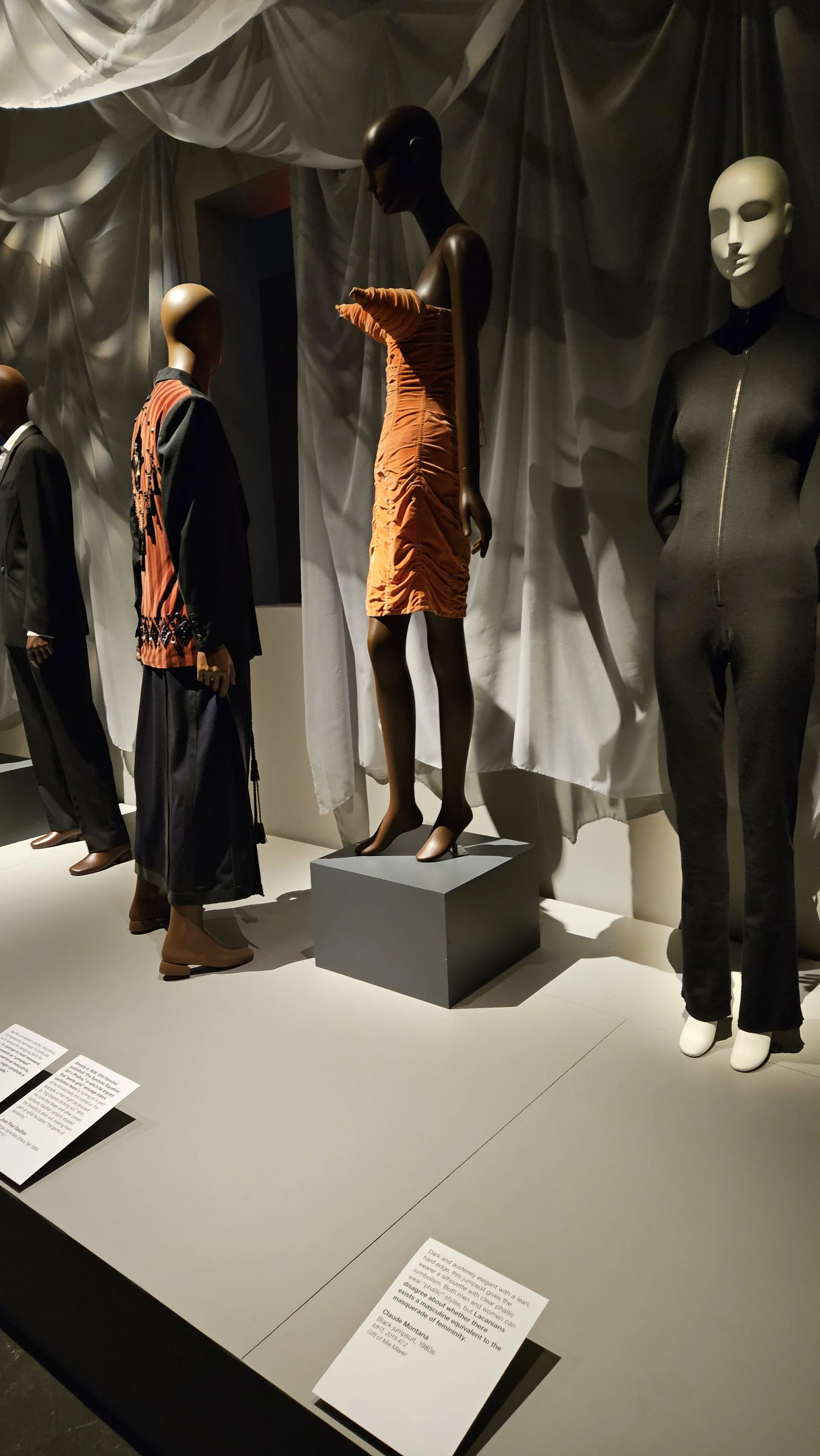
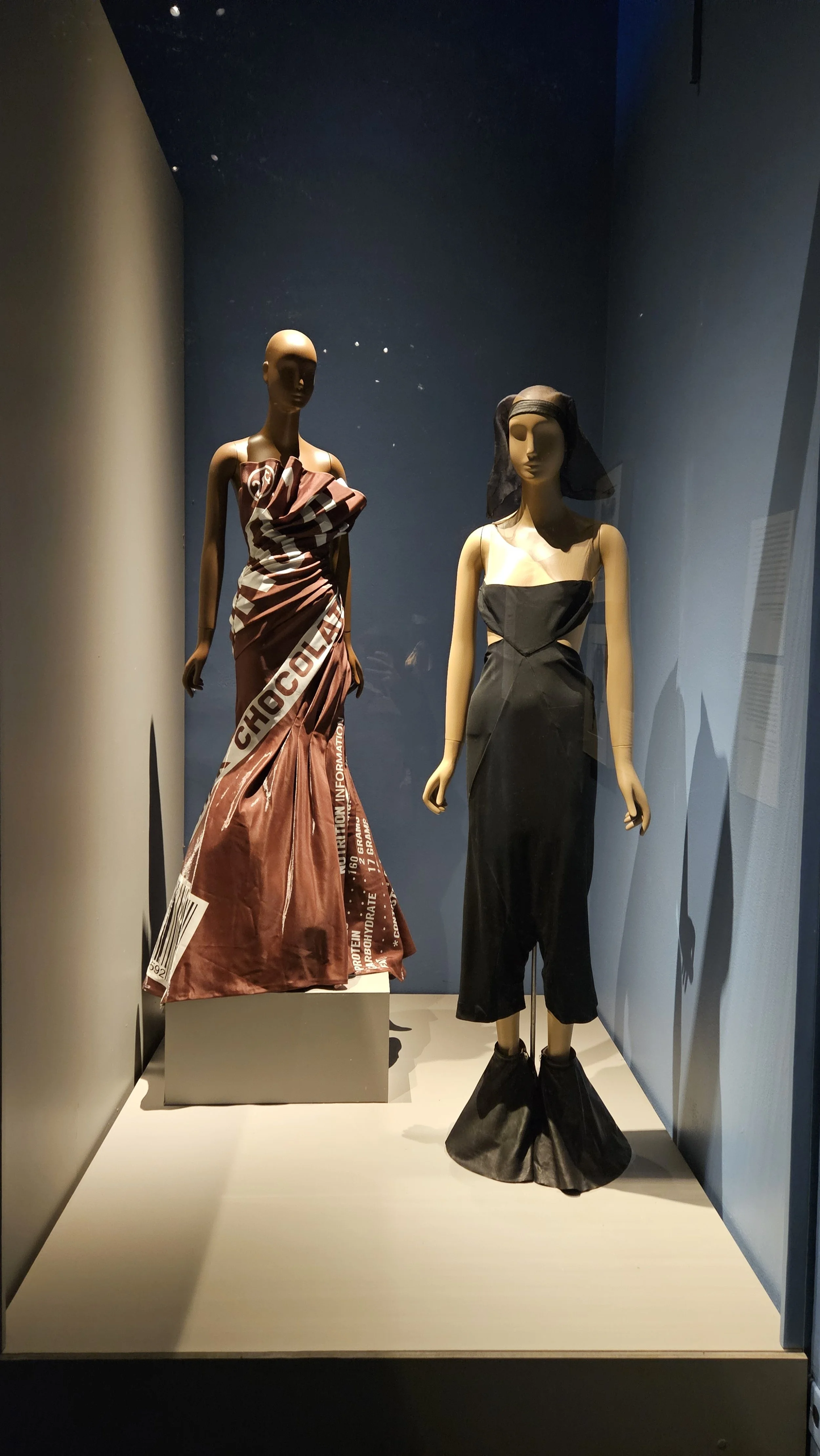
While I was already fascinated by the interaction between psychoanalysis and fashion, this exhibition at FIT brings these ideas to life with a mesmerizing conversation between a range of fashion pieces and playful descriptions about how they speak to the psychoanalytical search for hidden meanings.
The exhibition opens with the quotation from historian Peter Gay: ‘We all speak Freud, whether we know it or not.’ While the descriptions in the exhibition frequently express the limitations and biases of traditional psychoanalytical ideas, particularly homophobia and misogyny in the first half of the twentieth century, there is much to be explored through a study of fashion and its interaction with the body, sexuality, and the unconscious. Whether it is by evoking Carl Jung’s ‘collective unconscious’, Freud’s dream interpretations and the pleasure principle, or Lacan’s mirror stage, the fashion choices that designers make transform fabric into symbols and images that begin deeper conversations about our hidden desires, fantasies and fears.
Clothes are ‘often referred to as a “second skin”’, begins one of the exhibition labels. Fabric can hold the body, hiding a person from their fears or ‘providing a protective shield for someone who has suffered a narcissistic wound.’ This concept of clothing hugging the body, or framing it in a specific style that speaks to who we are or who we want to be seen as, resonated with me and the way I’d chosen the clothes for the characters in my novel.
In THE MODEL PATIENT, Evelyn Westbrook is an ex-fashion model, and has grown up dressing herself with obsessive precision, unconsciously driven by a need to attract, to be valued, to be loved: her appearance has, since she was a child, been the driver in her understanding of herself and how others see her. Now, faced with an enigmatic therapist who reveals very little of himself or what he thinks of her, she becomes fascinated with his clothing choices, projecting her own interest in clothes onto him. Every fashion choice he makes is significant to her, and she feels certain that he is communicating something to her through the clothes that he wears. The inspiration for this came from my interactions with my own therapist around the time I was writing the novel. Then, I found him cold and silent, and I felt deeply resentful of the way he hid himself entirely while I laid myself open in often very painful ways. Sometimes I felt that it was only in crafting stories behind his clothing choices that I could attempt to piece together a real person behind the mask of the therapist.
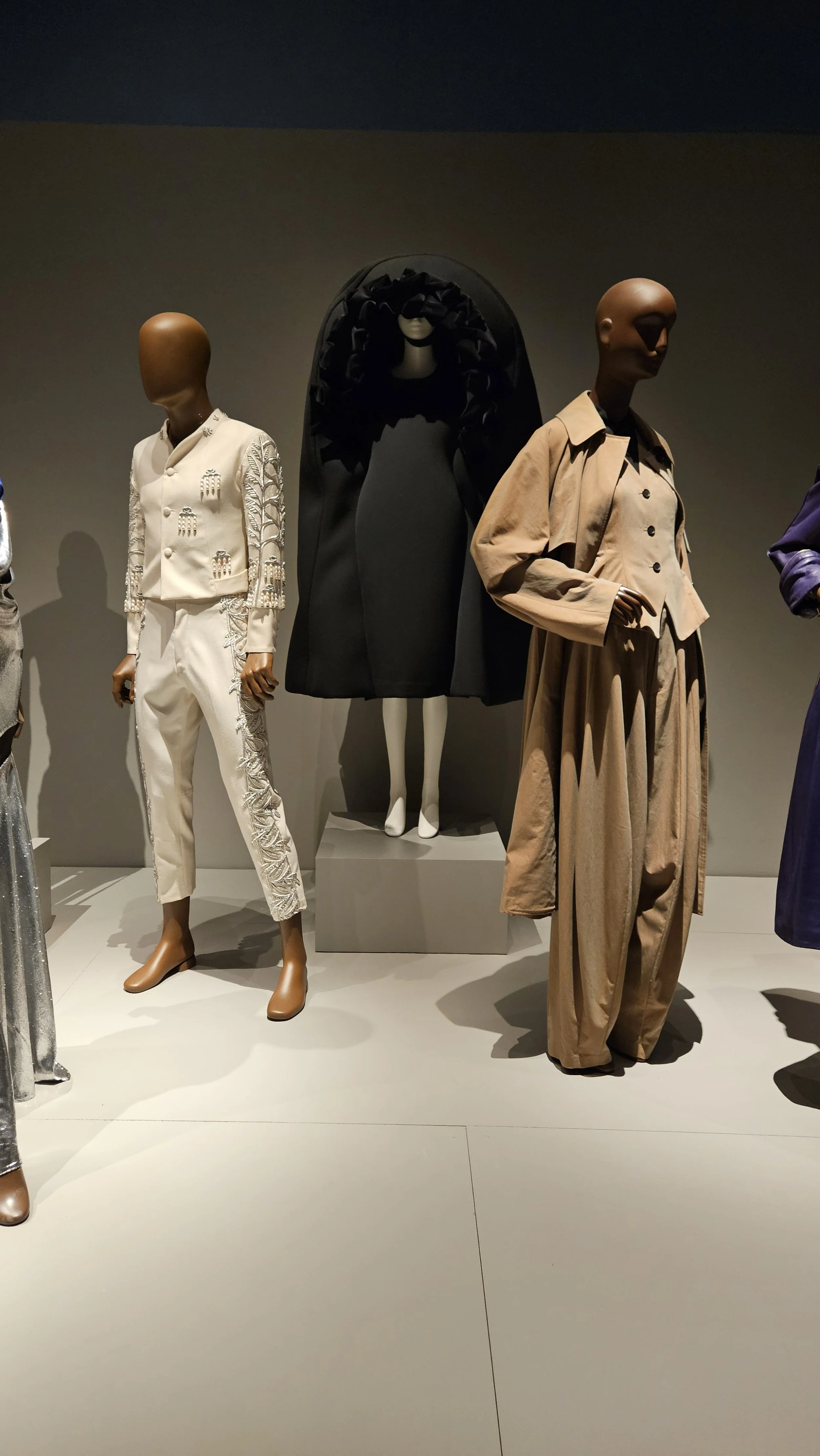
My favourite item in the exhibition is a dress from Rei Kawakubo’s Spring 2017 Comme des Garçons collection: a large black structure that simultaneously covers and takes up space. It both hides and expands the body, and I loved the association with a Rorschach ink-blot test, the dress inviting a multitude of perspectives depending on what the viewer or wearer brings from their past, their desires and their fears.
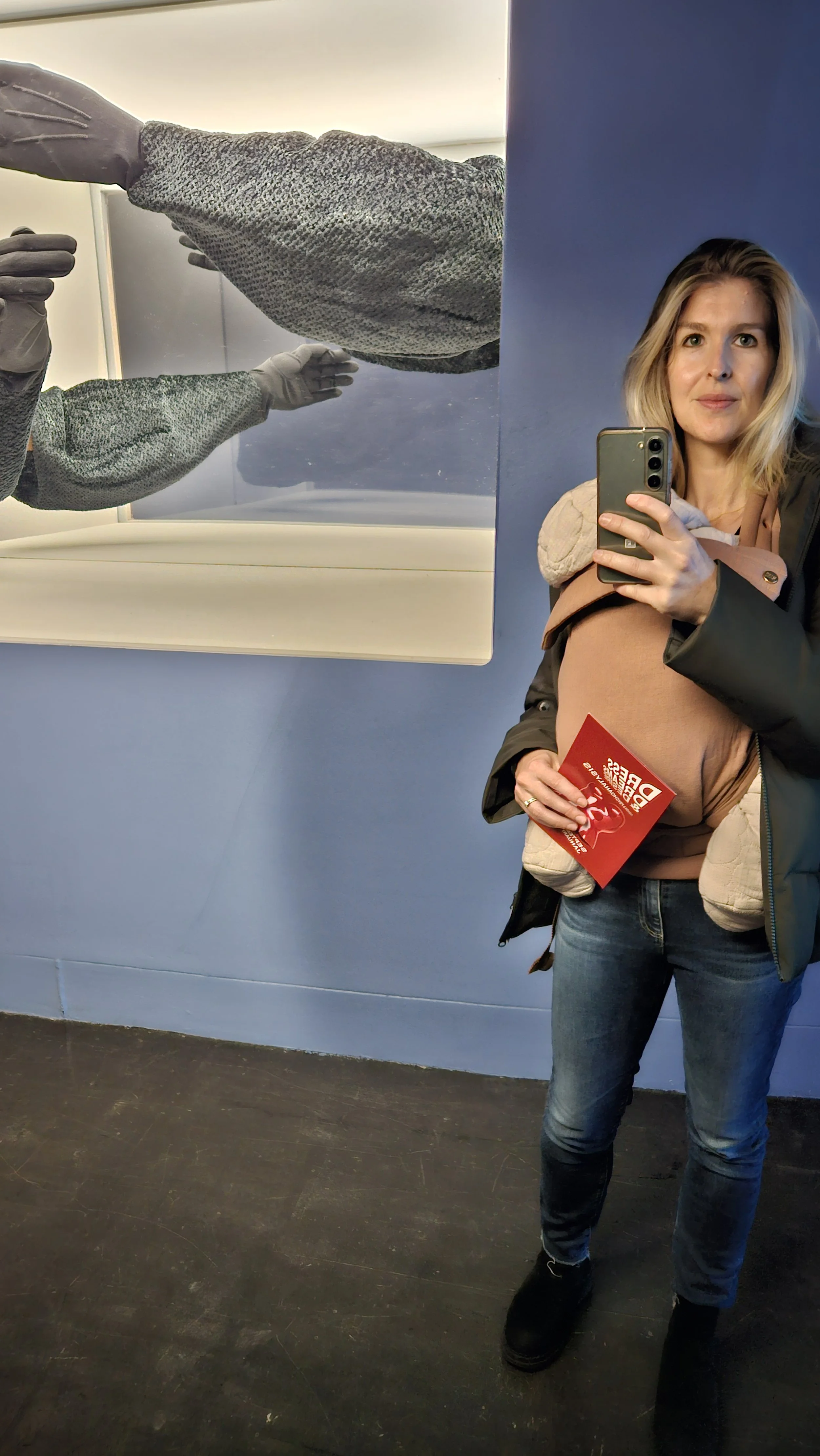
As I left the museum, I took a photograph of myself in the large mirror that ran along one wall of the exhibition, next to a pair of arms and hands in soft leather gloves that evoked a sensation of being held and contained. I thought about this photograph later, how I felt about my own clothing that day, the choices I had made. As a new mother, I’ve struggled to regain a compassionate relationship with my body after giving birth, despite knowing that my body has performed a remarkable feat, changing and expanding in order to grow another life. On that day, I was wearing my baby, her sleeping body warm beneath the baby carrier that wrapped around me. I was also wearing my pre-pregnancy jeans for the first time. I wasn’t sure what it all meant yet - I’d save that for my next therapy session - but there was something there for me to explore: my body returning, my baby against my chest, my understanding of myself, my shifting identities, all wrapped up in the fabric against my skin.
The exhibition is free and open until January 4th, 2026.
THE MODEL PATIENT, a psychological novel about a dangerous relationship between a therapist and patient in 1960s London, will be published in April 2026 and is available to pre-order now.